
menu
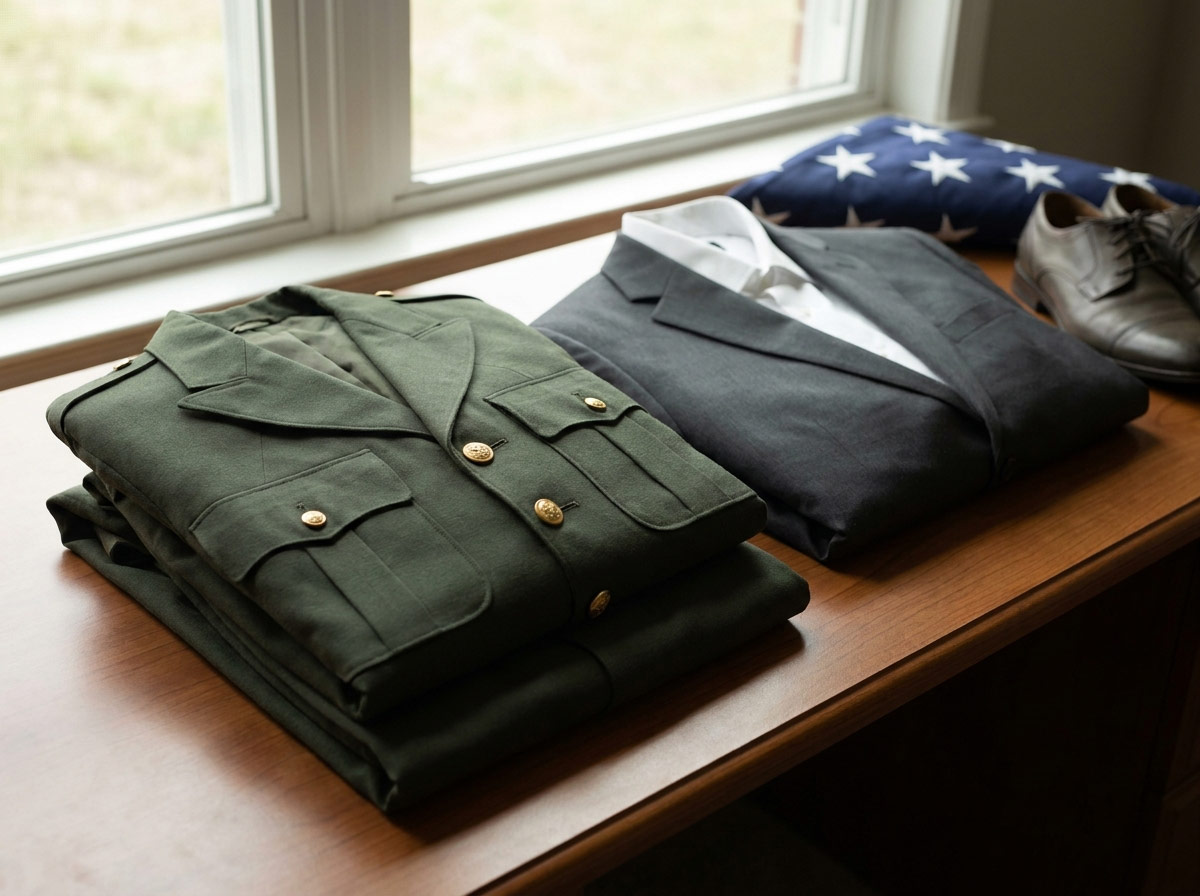
From Military Uniform to Civilian Wardrobe:
I come from a military family that spans every branch of service. While I haven’t served personally, I know that leaving the military can feel like you’re stepping into a completely different world. New language, new routines, new expectations. Kind of like Superman trying to blend in as Clark Kent - no cape or super suit, just glasses and a desk job.
But Clark Kent adapts. He may lose his uniform, but he keeps the same values and composure wherever he goes. That’s you - still the same person, just operating in a different uniform now.
A military uniform is more than what you wear. It’s identity, structure, and a shared mission. It tells everyone who you are, what you do, and that you’re prepared.
Civilian clothes can do something similar, just in a more subtle way. They still send messages about who you are and how you show up.
Stepping out of uniform doesn’t erase what it gave you. It just shifts how you show it. You’re using that same sense of purpose and applying it to how you dress now, building a new kind of uniform that fits your next mission. Here’s what that can look like.
Every workplace has its own version of a uniform, even if no one calls it that. The tech company might live in vests and white sneakers, while the bank insists on tailored suits, and the consulting company wears something in between. Your goal isn’t to blend in completely. It’s to learn the code, then express your own version of it.
The uniform you wore in service was part of a system where everything worked together. You can bring that same logic into your civilian wardrobe. Build a small, intentional system that makes getting dressed easy and repeatable.
Start with a few versatile pieces that mix easily, like two pairs of pants or skirts and three shirts. That’s your base. Then add layers like a jacket or a vest that adds structure.
If you’re working with an Edith stylist, they’ll walk you through designing a system that feels practical and completely you.
The attention to detail and discipline that served you in uniform will now become one of your best advantages. Pressed fabrics, polished shoes, and clean lines. It’s not about vanity, it’s about respect. It tells people that you’re prepared and you pay attention.
Your uniform once made you part of a collective. Now, your clothing can help you reclaim some individuality. Start small. Maybe it’s a watch, a particular jacket style, or a color that feels like your signature. Over time, those choices become your new insignia.
Your military experience has already given you the hardest skill to teach - composure.
The steadiness you learned in service is exactly what people look for in professional settings. Use your clothing to help project that as you build your next chapter.
Transitioning out of uniform isn’t about losing who you were. It’s about carrying it forward into a new chapter. Every time you walk into a room, whether it’s an interview, a meeting, or your first day on a new team, you’re bringing the same readiness that once defined your role.
The mission changed, but you didn’t.