
menu
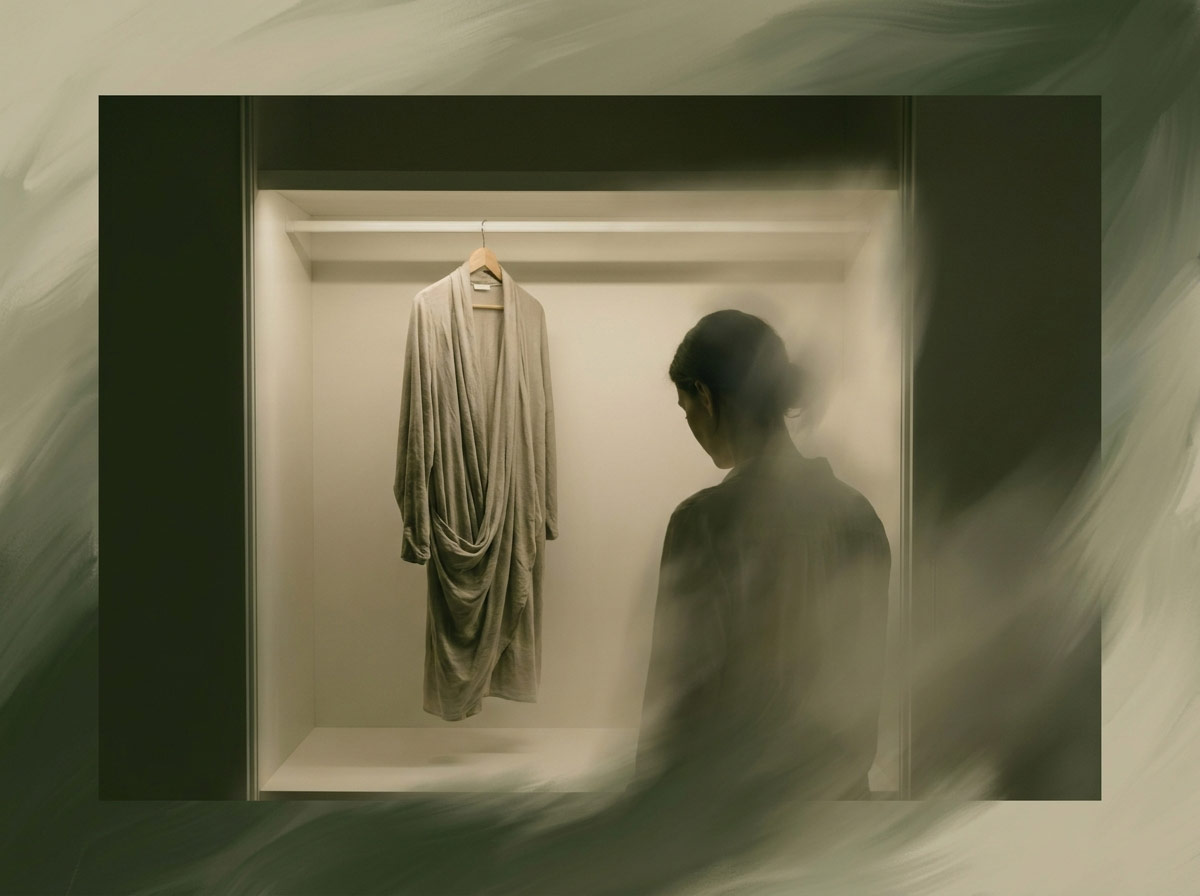
You’re standing in front of your closet, holding the t-shirt from your favorite concert. Nearby hangs the suit you bought for a big interview years ago, and the jeans that bring back a chapter of life you loved. But you haven't worn any of it in years. You’re meant to be decluttering, but the donation bag at your feet is still empty. Because it’s not just stuff - it’s pieces of who you once were.
When you stand in front of your closet deciding what stays and what goes, you’re often sorting through more than fabric. It isn’t simply a practical task; it’s an emotional one. No wonder letting go can feel heavier than expected.
First there are all the memories. Clothes are the quiet witnesses to our lives, tied to how we felt during certain chapters. Letting go of an item can feel like letting go of what it represents.
Then there’s grief. Some clothes belong to versions of ourselves that no longer exist: a former body, a past role, a life we once imagined. Releasing those pieces can feel like admitting a chapter has closed, or even like a personal failure.
There’s also fear - fear of needing these clothes again if your body changes, fear that you’ll regret letting something go, or fear of how you’ll afford to replace what you remove. These worries can keep closets frozen in time.
And finally, there’s the guilt. Maybe you spent good money on something you barely wore. Maybe it was a gift from someone you care about. Maybe you worry about being wasteful or contributing to landfill problems. These thoughts can turn decluttering into a moral dilemma, leaving items untouched out of obligation rather than usefulness or love.
The question isn’t how to avoid these emotions in the decluttering process, but how to move through them. With the right approach, decluttering your closet can become less about loss and more about clarity, intention, and care for the life you’re living now. Because when a closet is filled with reminders of who you used to be, it’s harder to see who you’re becoming.
Decluttering often stalls when we’re still negotiating with who we used to be, and it starts to move once we’re willing to meet ourselves where we are now. But with the right frame of mind and structure, the process becomes far less overwhelming.
Here are some practical steps to help you finally edit your wardrobe:
Tackling your entire wardrobe at once can be overwhelming. Instead, start with a single category in mind, like shoes or sweaters or all the items that you know don’t fit. Or even just focus on a single drawer. Set a timer for 15-30 minutes and work through that category only. Small wins build momentum and keep the process from feeling daunting.
If a piece no longer belongs in your life, consider its next chapter. Donating to a meaningful cause can turn letting go into an act of giving, while reselling allows a well-made item to continue being worn and valued. High-quality or designer pieces may be suited for consignment through The RealReal (we have a guide to help), while others are better matched to platforms like ThredUp. Once decided, don’t let it linger. Remove it from your space.
You don’t have to make every decision immediately. For items you're unsure about, place them in a ‘Maybe’ box and store it out of sight for a few months. If you don't think about or reach for those items during that time, it's a clear sign you can let them go. This approach gives you emotional space and makes the final decision feel less abrupt.
For meaningful items you’re torn about letting go, find another way to preserve the memory. Take a photo of the item or you wearing it, frame a piece of lace from a special dress, or use a beautiful fabric to create a throw pillow. If you really can’t part with a few deeply sentimental items, create an ‘Archive’ or ‘Memory’ box to safely tuck the items out of sight. This allows you to honor the memory without sacrificing valuable closet space or staying stuck in the past.
Imagine opening your closet and seeing only items that fit, feel good, and reflect who you are now. A curated wardrobe simplifies getting dressed and creates a more effortless life. This vision can be a powerful motivator.
Letting go makes room for a wardrobe that supports your present and future, rather than one that keeps pulling you backward. This often means removing the items that make you long for your past self. It isn’t easy, but it’s a crucial step. Decluttering isn’t the end goal; it’s the foundation for intentionally rebuilding a wardrobe that reflects who you are now.
When you walk into your room, your closet should bring calm and confidence, not stress. With intention and self-compassion, you can release the emotional weight of old clothes and create space for what’s next. Begin with one small decision. Clear a single drawer or let go of one item and notice how it feels. Small shifts often create the most meaningful change.